
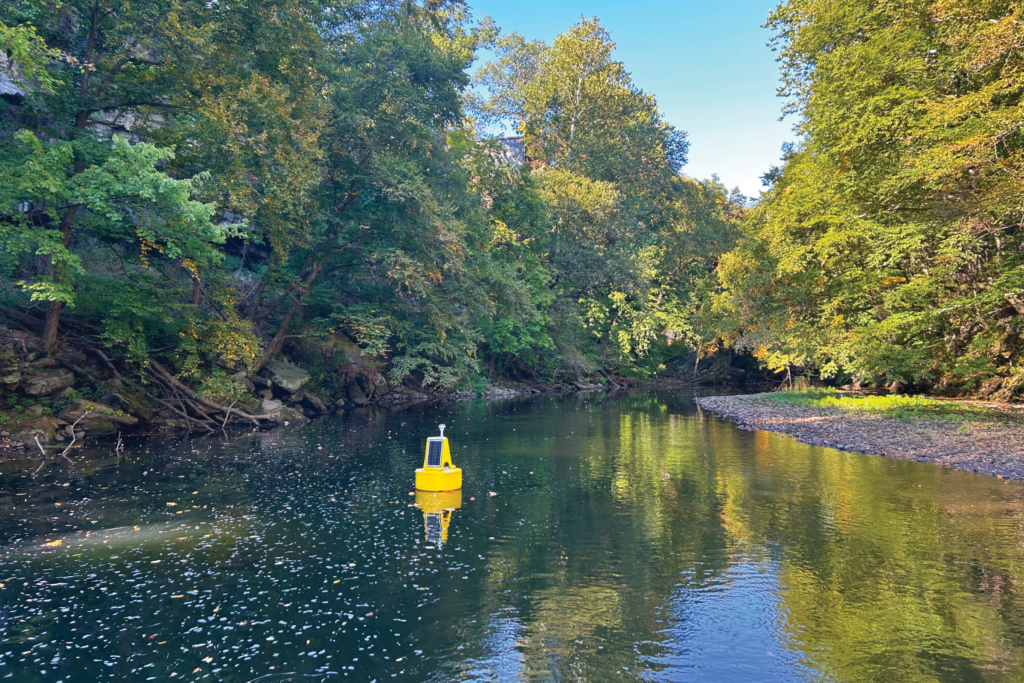
The first time I saw the barge, which would hold the necessary equipment needed to remove contaminated sediment from the Cuyahoga River and make dam removal possible, I wasn’t fully focused on the barge itself. I was watching my colleague, who has dreamed of (and worked toward) the Gorge Dam removal for decades. “Wow,” she murmured, awestruck. When you consider the mechanics of the operation, plus the years of overcoming challenges, planning and logistics that made it possible, “wow” is right!
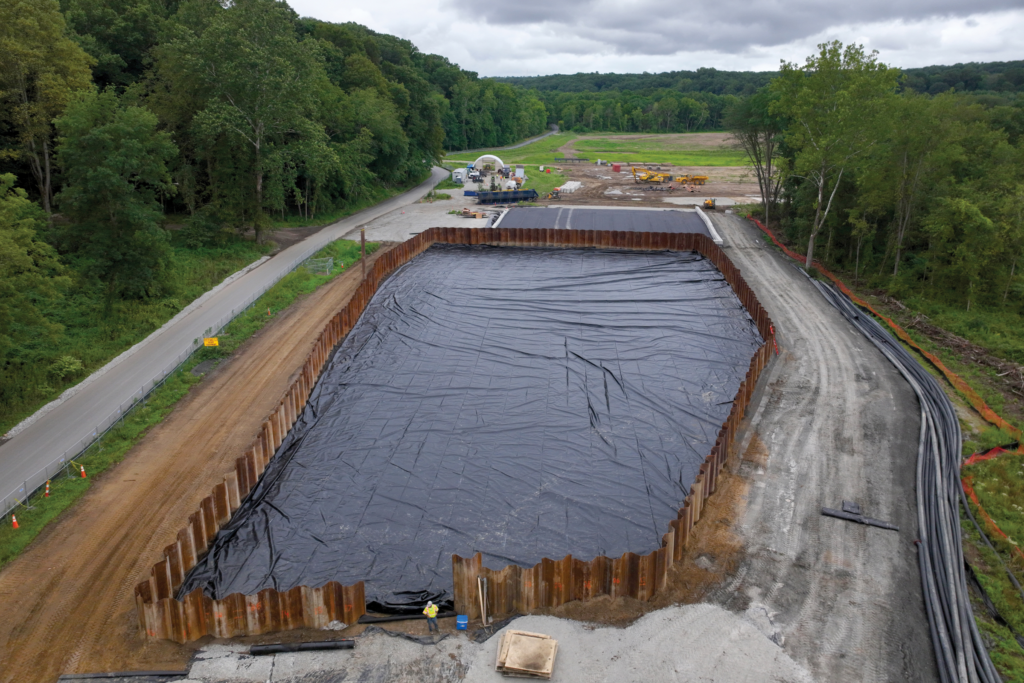
Sediment remediation is achieved using a hybrid system of dredging mechanically and pumping hydraulically. An excavator removes sediment from the Cuyahoga River and places it into a mixing tank on the barge. Inside the tank, augers mix the material with just enough water to make it pumpable. Then, pumps pull it from the tank and send it through a pipeline to the sediment placement site on Peck Road where it’s discharged into a containment area. It holds about 6,000 cubic yards.
Next, Portland cement is added. The sediment and cement are mixed thoroughly using a pug mill or augers. The cement dries and strengthens the material to prevent it from slumping when placement cells are built.
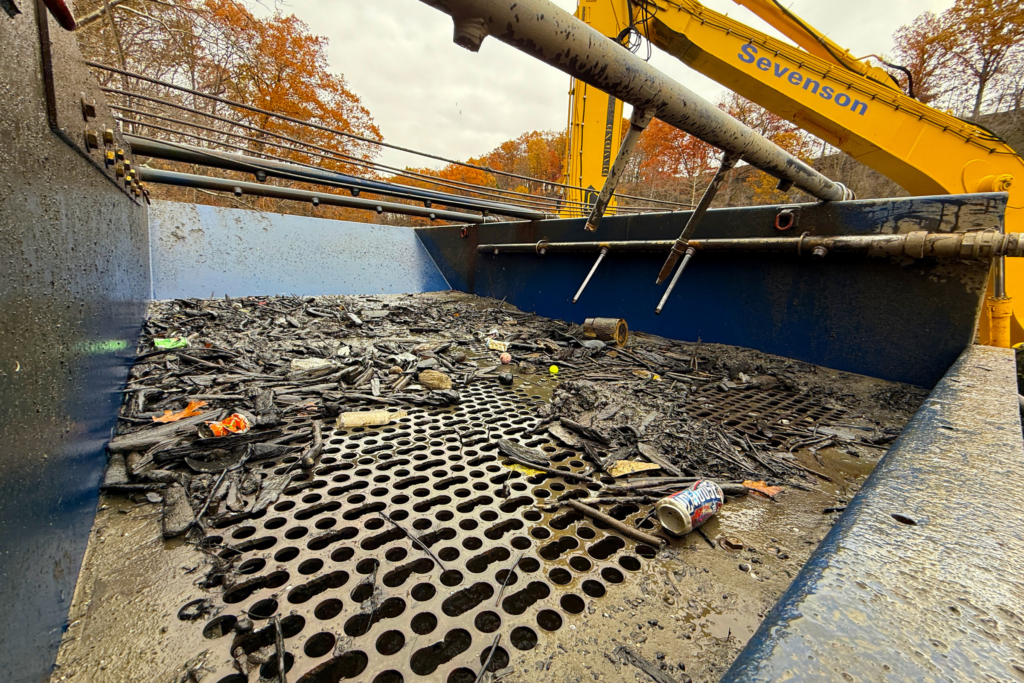
Of course, there’s more than sediment at the bottom of the dam pool. That’s where filtering comes in — this, too, occurs on the barge prior to pumping. When the excavator empties material into the mixing tank, the material passes over an angled screen. Sediment and water pass through, while debris hits the screen and gets diverted into a separate bin. When the bin is full, the debris is unloaded and sampled to determine where it goes; it could be recycled, diverted to a landfill or, in some cases, sent to the Peck Road site, depending on size, material type and sampling results.
Among the sediment, organic debris like sticks and vegetation is expected. Unexpectedly, dredging operations have also uncovered freshwater mussel shells. Because freshwater mussel shells are slow to decay, they can provide a 100-year ecological record of mussel presence in the Cuyahoga River and exciting new research opportunities for Summit Metro Parks staff.
Dredging operations could also uncover artifacts contained within the sediment. Experienced equipment operators, the sediment screening process and characterization help flag archaeological discoveries like these.
In the event of an archaeological discovery, project staff follow an Inadvertent Discovery Plan, which provides guidelines for the onsite contractor and project management staff if unanticipated artifacts are discovered. Through careful planning, Summit Metro Parks staff, project stakeholders and contractors can work together to ensure that important cultural resources are handled properly and get the care they require. The fate of such artifacts depends largely on their nature.
Some items that have been submerged for a long time can deteriorate quickly once they’re removed from the water or mud, making them difficult to preserve. Other objects may be too large or not feasible to add to a collection. When possible, the park district may share photos or 3D models of items of interest so there’s a record of these pieces of history that can be shared with the public. We also have established procedures in place if an item requires collection and permanent curation.
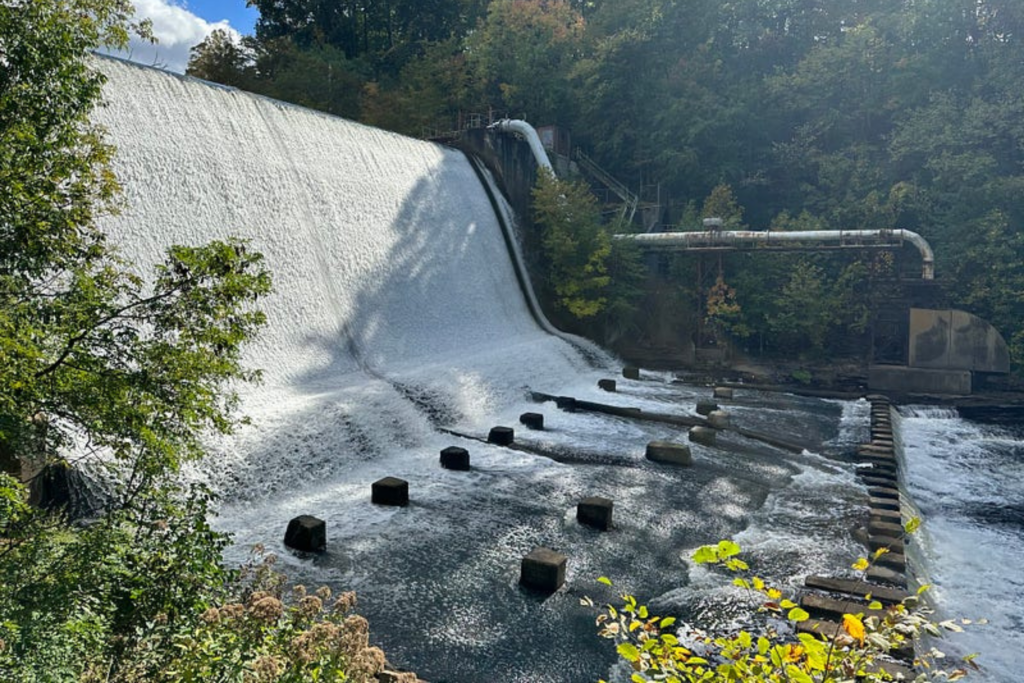
As progress continues on land and water, we look forward to sharing more updates on this exciting project
to Free the Falls!
Find links to the Free the Falls podcast, view project updates and more at bit.ly/freethefalls.
For more stories like this, check out Green Islands magazine, a bi-monthly publication from Summit Metro Parks. Summit County residents can sign up to receive the publication at home free of charge.