
The slow and progressive recovery of Ohio bats after white-nose syndrome

People are sometimes surprised I know more about how bats are doing than eagles. It’s because eagles are well into the safe zone now — they do not currently need our help. Sometimes, working as a wildlife biologist feels like being a doctor triaging patients in a time of crisis; those in the most critical condition receive the most attention, while those recovering quietly fade from focus as the next crisis emerges. That was certainly the case when white-nose syndrome (WNS) arrived in North America and triggered one of the most devastating wildlife collapses on the continent.
WNS is a fungal disease native to Europe and Asia, where bats have evolved alongside it and developed resistance. North American bats, however, had no such defenses. When the fungus was accidentally introduced in upstate New York, it spread rapidly. Infecting bats during hibernation, when their body temperatures are low, it causes them to wake frequently, burn through fat reserves and ultimately die. Millions were lost.

By around 2007, WNS reached Summit County. The effects were immediate and alarming. Reports came in of bats flying into the snow in midwinter, only to die shortly after. Summer monitoring revealed steep population declines. Once-common species, like little brown bats, northern long-eared bats and tricolored bats, vanished from sites where thousands had once been counted. In some cases, populations dropped to undetectable levels. There were nights when we recorded no bats at all.
We had warning. We knew WNS was coming and understood what it could do. Still, nothing prepared us for the scale of the loss. Years of conservation work seemed to unravel almost overnight.
And yet, nature can be resilient — especially when people work together to protect what remains and identify a clear path for recovery.

In response to WNS, biologists mobilized. The U.S. Fish and Wildlife Service implemented new protections, and as populations declined, several species were listed as threatened or endangered. The northern long-eared bat, once as common as a cardinal, was listed as threatened, then moved to endangered status. While such listings reflect serious concern, they also provide critical protections. Development and land-use projects now follow strict guidelines to avoid harming sensitive habitats, including restrictions on tree cutting during key reproductive periods.
At the state level, Ohio followed suit, listing multiple bat species as state endangered. Together, federal and state agencies have worked to ensure that development, transportation and energy projects do not further impact these already vulnerable species. They have also led broader education and conservation efforts across the region.
At Summit Metro Parks, our work has focused on protecting habitat and supporting what remains of these fragile populations. This has included acquiring land in key areas, monitoring known maternity colonies, implementing tree-cutting restrictions aligned with state and federal guidance, and installing gates and monitoring equipment at hibernation sites to reduce disturbance. Our naturalists offer programs that highlight bats in our park district and the important role they play in conservation.
For years, we monitored and waited, hoping for signs that these efforts might make a difference.
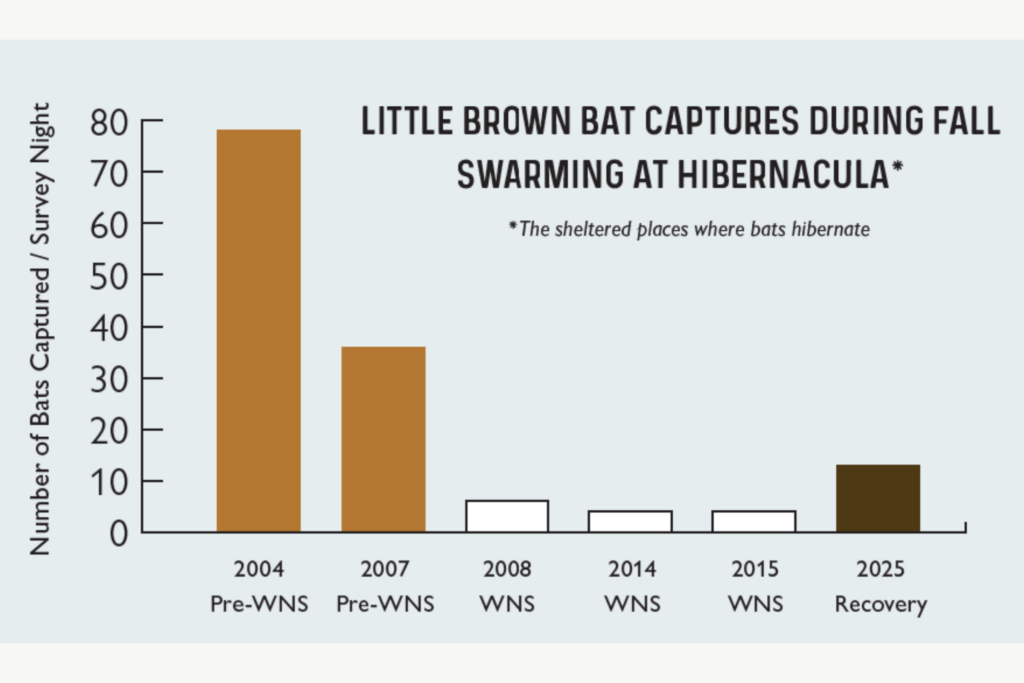
In 2025, we began to see the first glimmer of hope. Surveys near winter hibernation sites showed slight increases in bat activity. Notably, numbers of the state-endangered little brown bat began to rise. We also reconfirmed the presence of the federally endangered Indiana bat — one of the region’s most imperiled species. One specimen we captured was in excellent condition, having built up significant fat reserves for hibernation.
These are small but meaningful signs of recovery.
Still, the situation remains fragile. Bats reproduce slowly (typically only one pup per year), so recovery will take decades. Continued vigilance is essential. Protecting habitat, minimizing disturbance and maintaining conservation efforts will determine whether these species truly return.
With hope and help, silent wings are again taking to flight.

Frequently asked questions
Q: Do bats carry rabies?
A: Bats can carry rabies, but it’s rare. Avoid handling bats, especially if they appear sick or injured. If contact occurs, seek medical advice.
Q: How can I get a bat out of my house?
A: For a single bat, close off the room, turn off lights and open a window — it will usually leave on its own.
If multiple bats are present (likely a maternity colony), contact a wildlife professional. The Ohio Department of Natural Resources can help connect you with specialists.
Q: Can a bat with white-nose syndrome be cured?
A: Bats with white-nose syndrome can sometimes recover in rehabilitation. Treating wild populations, however, remains difficult, so conservation focuses on protection and natural recovery.
For more stories like this, check out Green Islands magazine, a bi-monthly publication from Summit Metro Parks. Summit County residents can sign up to receive the publication at home free of charge.